
Mandala Art: History, Meaning, Types and Techniques

Mandala Art transforms simple circles and patterns into powerful tools for focus and calm. The repeating shapes naturally slow the mind and encourage presence. Anyone can begin with just a pen and paper - no special skills needed. This ancient practice turns quiet moments into meaningful creative expression that builds mental balance.

What is Mandala Art?

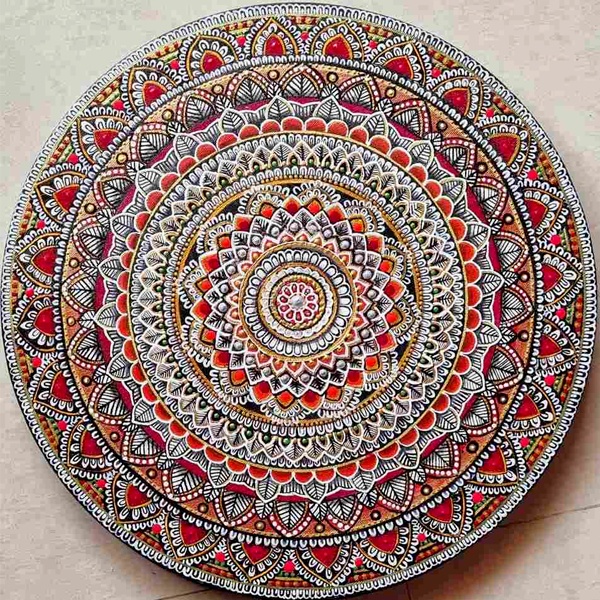
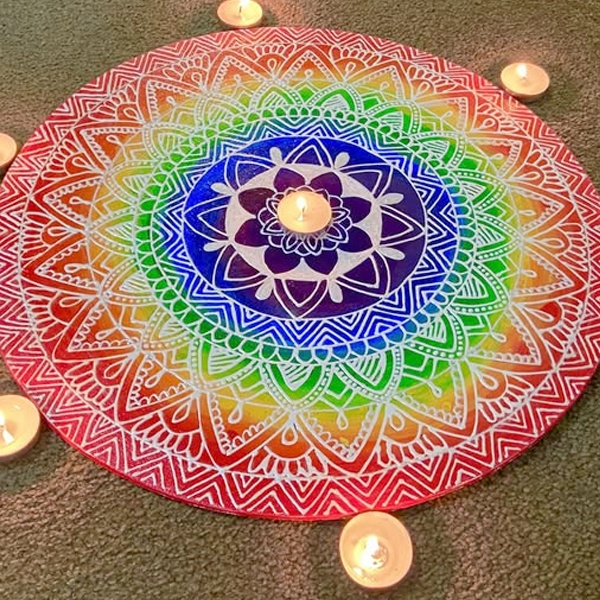
Traditional mandala art with colorful circular symmetrical patterns radiating from center point
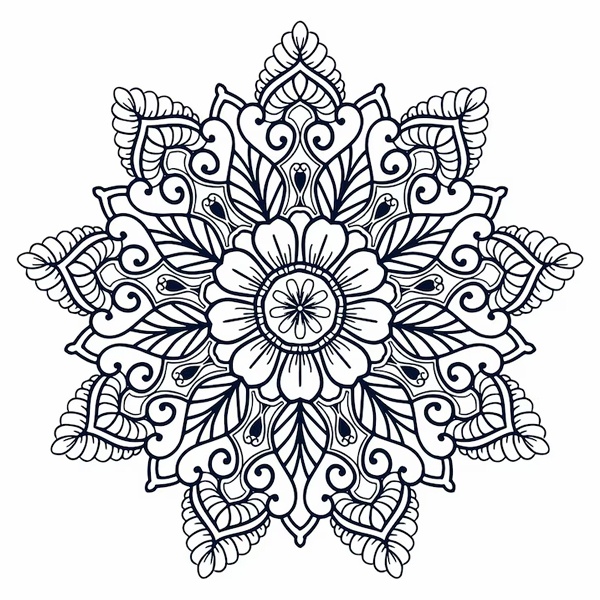
Mandala Art is a structured design that starts from a central point and grows outward in a balanced, organised pattern. The word Mandala comes from Sanskrit and means Circle or Sacred Centre. In Indian tradition, mandalas appear in temples, rangoli and spiritual drawings. The circle holds everything together and represents wholeness.
Symmetry defines mandala art. Patterns repeat evenly on all sides, which creates balance and visual calm. Circles form the base of mandala designs because they guide the eye smoothly from the centre to the outer layers. Other shapes fit inside, but the circular structure controls the flow.
Mandala art is not just about drawing. Many people use it as a meditative practice. The structured patterns guide attention inward, making mandala drawing a form of active meditation.

History of Mandala Art: From Ancient India to Buddhism

Historical origins of mandala art in ancient India and Buddhist traditions showing sacred circular patterns
Mandala art began in ancient India as a spiritual and visual tool. Ancient scholars used circular patterns to represent universal structure and balance. Sanskrit texts call mandalas sacred diagrams that focus the mind during meditation and rituals. Simple geometry and symmetry gave these designs their power and meaning. Hindu traditions used mandalas widely in daily worship. Priests drew them on the ground with rice flour, coloured powders or flowers during pujas and festivals. Temple architecture also followed mandala layouts. Many Indian temples place the main deity at the centre, guiding devotees inward, both physically and spiritually.
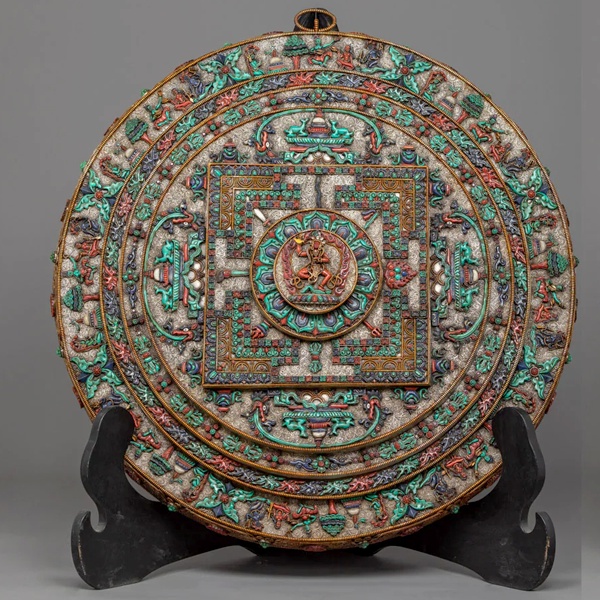
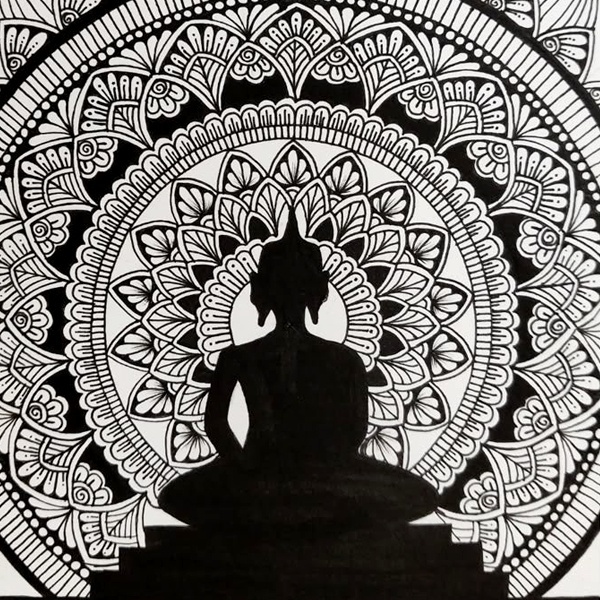
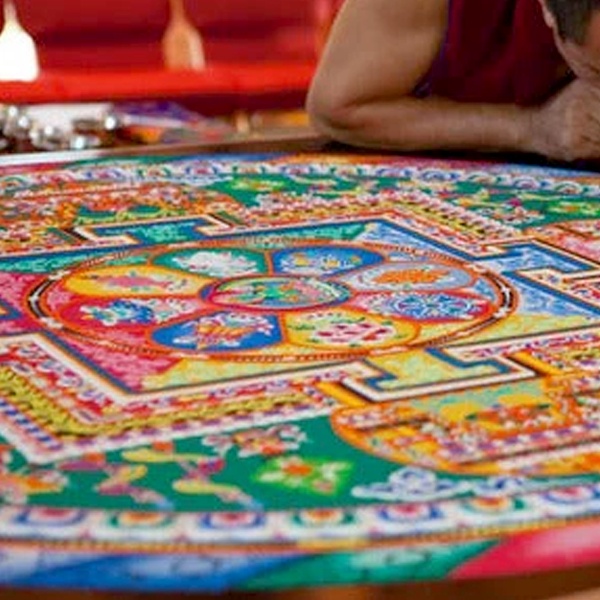
Buddhism carried mandala art further, especially in Tibetan culture. Tibetan monks create detailed mandalas featuring spiritual figures in perfect balance, training practitioners in focus and mental discipline. Sand mandalas highlight an important Buddhist idea. Monks create them with great care and then erase them soon after completion. This deliberate destruction teaches impermanence - even the most beautiful creation eventually fades.
As Buddhism spread, mandala ideas travelled across East Asia. China, Japan and Nepal adapted the art to local styles while keeping its spiritual core. Over time, mandala art became a shared symbol of harmony, meditation and inner order across cultures.

Types of Mandala Art

Traditional spiritual mandala used in Hindu and Buddhist meditation and prayer practices

Traditional Spiritual Mandalas

Traditional spiritual mandalas come from Hindu and Buddhist practices. Artists create them using precise patterns that move from the centre outward. Each layer carries symbolic meaning connected to the universe, balance and inner awareness. Indian temples, prayer books and meditation spaces showcase these precise spiritual designs. Artists work with earthy colours, strict symmetry and intricate linework to honour spiritual traditions.
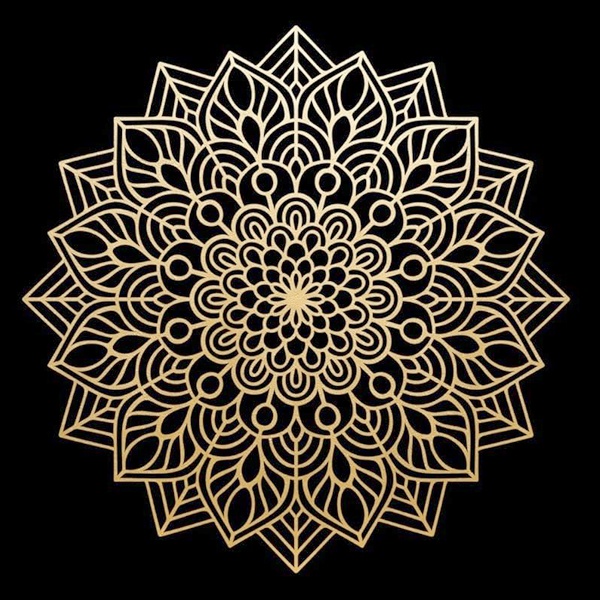
Geometric mandala art featuring precise circles, triangles and mathematical symmetrical patterns

Geometric Mandalas

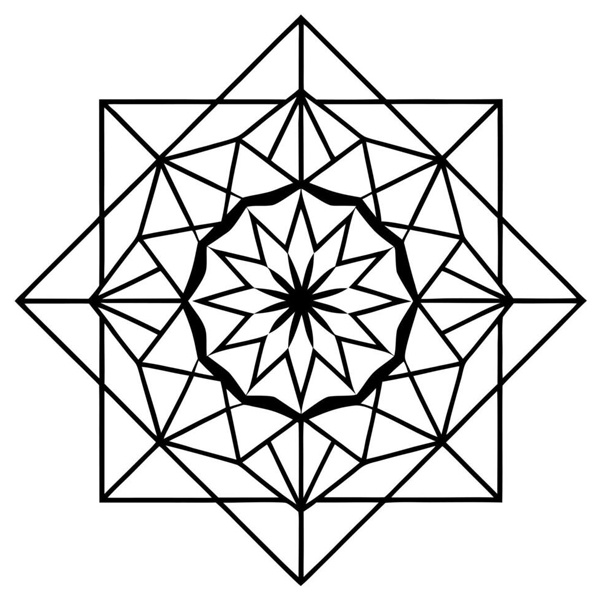
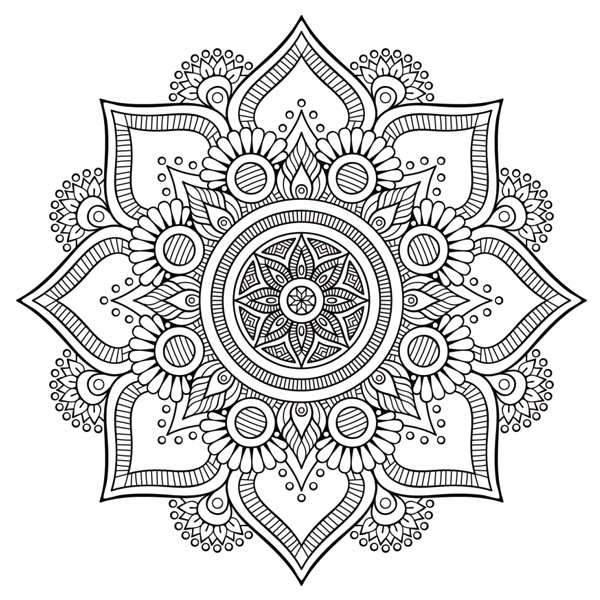
Geometric mandalas rely on circles, triangles, squares and repeating shapes. Each shape follows mathematical rules, creating satisfying visual balance. The clear geometric structure makes these ideal for beginners learning symmetry. Designers often use geometric mandala art in wall decor, rangoli designs and digital illustrations. The clean patterns create a sense of order and visual calm.
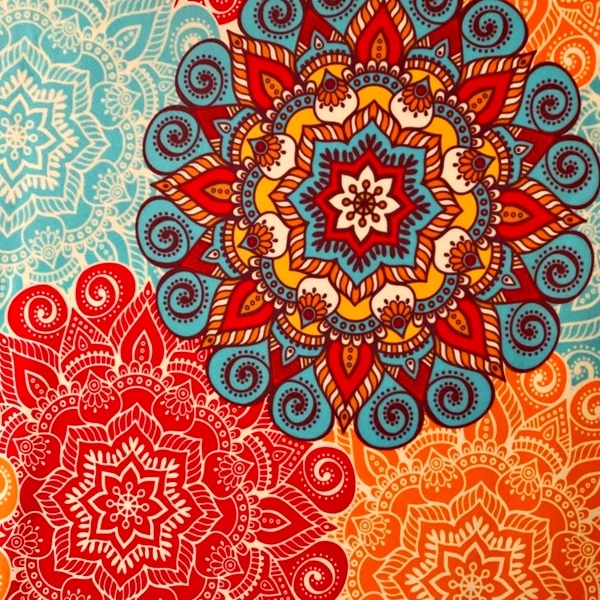
Floral mandala design with lotus petals and nature-inspired organic patterns

Floral Mandalas

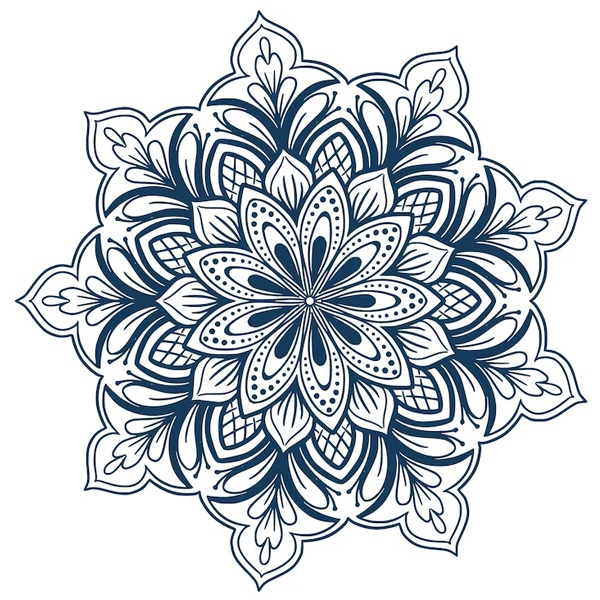
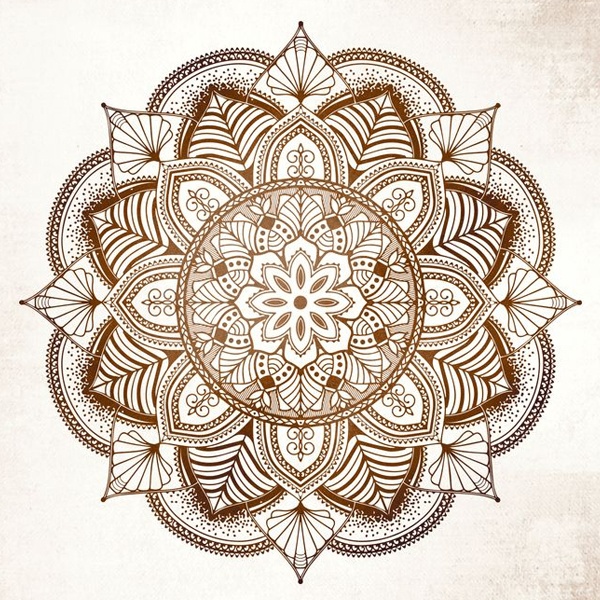
Floral mandalas draw inspiration from flowers, leaves and natural forms. Artists build petals layer by layer around a central point. The curved petal shapes create softer, more organic patterns than geometric designs. Many artists use floral mandalas in mehndi designs, textile prints and notebook covers. Bright Indian colours like maroon, mustard, teal and indigo often dominate this style.
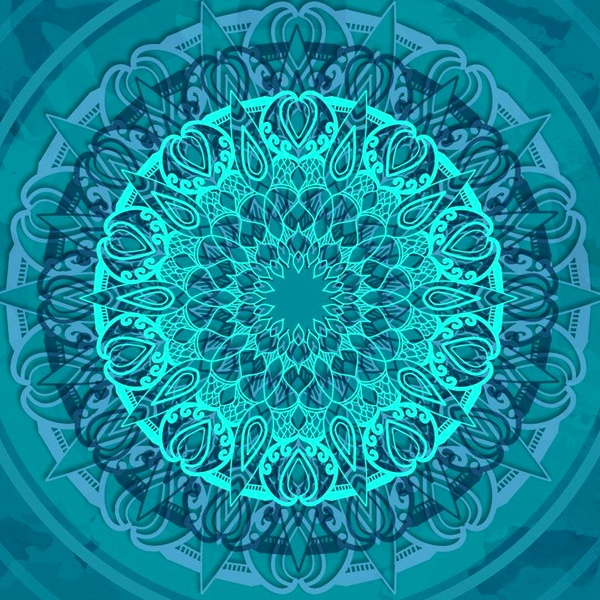
Contemporary and abstract mandala art with modern colors and experimental design patterns

Contemporary & Abstract Mandalas

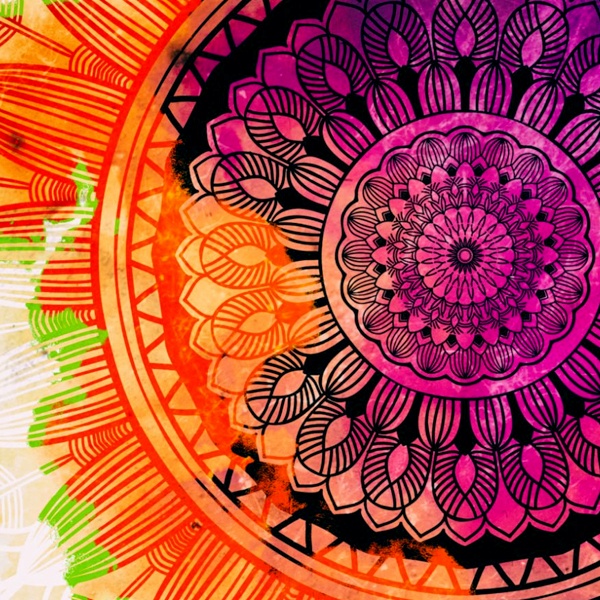
Contemporary mandalas break traditional rules and encourage free expression. Artists experiment with uneven shapes, bold colour combinations and modern themes. Abstract mandalas break symmetry rules whilst keeping the central focus point. Modern art prints, fashion graphics and home décor commonly feature this contemporary style.
Healing and meditation mandala for therapeutic stress relief and mindfulness practice

Healing & Meditation Mandalas

Healing mandalas focus on emotional balance and mindfulness. Calming colours and gentle patterns define healing mandalas. Colouring these designs reduces stress and improves focus during daily practice. Art therapists and wellness instructors in India often recommend mandala colouring books for daily practice. The act of colouring helps improve focus and emotional clarity.
Decorative mandala patterns used in Indian fashion design, textiles and saree embroidery

Fashion & Decorative Mandalas

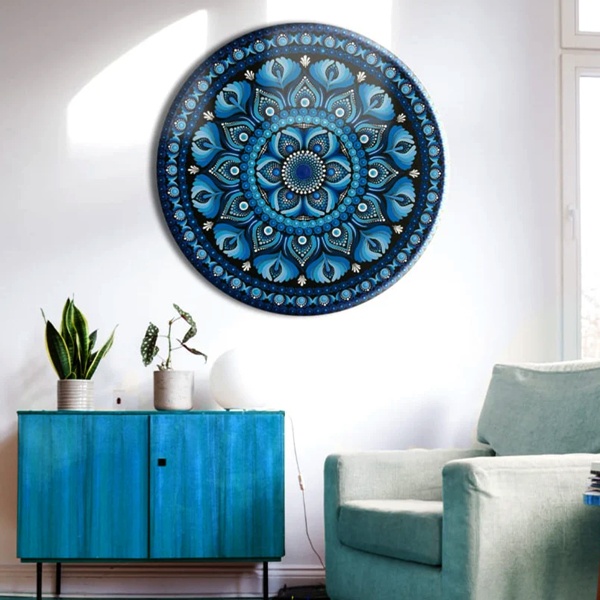
Fashion and decorative mandalas blend art with everyday style. Designers use mandala patterns on sarees, dupattas, lehengas, cushions, wallpapers and jewellery. Screen prints, embroidery and digital prints bring these designs to life. These motifs bring cultural authenticity and intricate detail to traditional and fusion garments.

Symbolism and Meaning Behind Mandala Art

Every element in mandala art holds symbolic meaning, from the central point to colour choices.
 
  • Spiritual and Psychological Symbolism

    Mandala art reflects inner balance. Creating and viewing mandalas builds calm, sharpens focus and deepens self-awareness. It reminds the mind to slow down and find order within chaos. Many people use mandalas during meditation because the patterns help improve concentration and emotional clarity.
  • Meaning of the Centre Point

    In mandala philosophy, the centre represents the self and inner consciousness. It represents the self, consciousness or inner truth. The eye naturally travels to the centre, mirroring the inward journey towards mental clarity.
  • Symmetry and Repetition in Mandalas

    Symmetry symbolises balance and harmony. Repeating patterns create a sense of rhythm and stability. Predictable patterns comfort the mind and reduce mental noise. Repeating patterns echo natural cycles of growth, change and renewal. Each repeated shape strengthens focus and promotes a peaceful mental state.
  • Common symbols used in mandala art

    Mandala artists often use meaningful symbols:
    • Lotus symbolises purity and spiritual awakening, representing the ability to rise above challenges.
    • Chakras represent energy centres of the body. Artists use them to express emotional and spiritual alignment.
    • Geometric patterns such as circles, triangles and squares symbolise unity, strength and structure. Circles show completeness, triangles suggest transformation and squares reflect stability.
  • Colour symbolism in mandala art

    Colours choices directly affect the emotional impact of mandala art.
    • Red represents energy, strength and passion.
    • Blue symbolises calmness, trust and mental clarity.
    • Yellow reflects positivity, learning and creativity.
    • White stands for peace, purity and balance.
    • Black represents depth, mystery and introspection.

Mandala Art for Mental Health and Mindfulness

Drawing or colouring mandalas reduces anxiety and improves focus within minutes. The focused attention on shapes and patterns naturally pulls the mind away from worries. Brain activity during mandala colouring mirrors meditation states, research shows. Repeating patterns play an important role. The brain finds comfort in this order, which helps reduce stress and mental clutter. Studies show even 20 minutes of mandala drawing lowers cortisol levels significantly.
Psychology studies support this effect. A 2025 study found mandala colouring reduced anxiety more than general colouring activities. Because of these benefits, therapists often use mandalas in art therapy to help people express emotions without speaking.

Mandala Art in Indian Culture and Daily Rituals

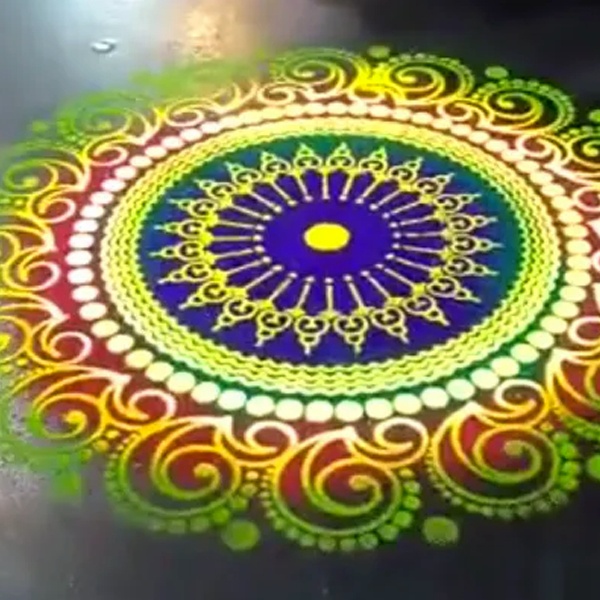
Traditional Indian rangoli and kolam floor art as cultural mandala forms during festivals

Rangoli & Kolam as Cultural Mandala Forms

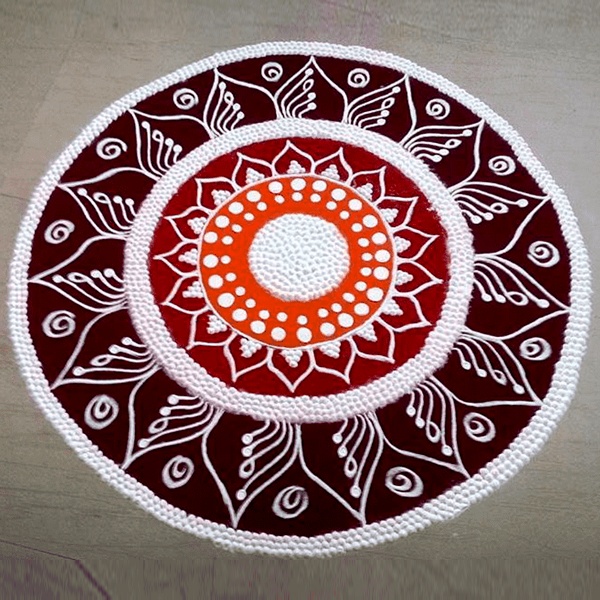
Indian homes display mandala art daily through rangoli and kolam. Artists draw rangoli using coloured powders, rice flour or flower petals at entrances. In Tamil Nadu and parts of South India, people draw kolam with rice flour in precise geometric loops. Families redraw these patterns each morning, marking the daily rhythm and welcoming guests.
Sacred yantra mandala diagram used in Hindu meditation and spiritual worship rituals

Mandalas in Yantras & Sacred Diagrams

Indian spiritual practices use mandalas in the form of yantras. A yantra follows strict geometry, with circles, triangles and lotus forms arranged around a centre. Devotees meditate on specific yantras depending on the deity or intention. The Sri Yantra ranks amongst India's most recognised sacred geometric diagrams. Priests draw these patterns on copper plates, paper or temple floors during rituals.
Mandala influence in Indian textiles including Kalamkari, Bandhani and Ajrakh fabric prints

Mandala Influence in Indian Textiles and Architecture

Indian textiles carry mandala-inspired layouts in block prints, embroidery and woven designs. Bandhani, Kalamkari and Ajrakh fabrics often feature circular symmetry and repeated motifs. Block-printed sarees and hand-embroidered dupattas showcase these circular motifs across generations. Indian architecture also reflects mandala principles. Temple layouts follow mandala grids, with the sanctum placed at the centre. The Sun Temple at Konark and many South Indian temples show this structured, radial planning.
Regional variations of mandala art across India including folk interpretations and alpana designs

Regional Variations & Folk Interpretations

Each region interprets mandala art in its own way. Maharashtra uses bold rangoli patterns with cultural symbols. Bengal creates alpana with white rice paste and fluid lines. Rajasthan favours detailed geometric floor art during ceremonies. Tribal communities add folk symbols, nature elements and local stories, giving mandala art a strong regional identity.
Ritual and festive use of mandala art during Diwali, Navratri and Indian wedding ceremonies

Ritual and Festive Usage

Festivals bring mandala art into public and private spaces. Diwali rangoli, Navratri floor designs and wedding mandalas mark auspicious moments. People create these patterns before pujas, housewarming ceremonies and temple festivals. Mandala art guides focus, celebrates harmony and connects daily life with spiritual belief across Indian culture.

Basic Mandala Art Techniques

Basic mandala art techniques showing radial balance, symmetry and step-by-step drawing methods
  • Radial Balance

    Mandala designs work outward from a centre point, with shapes spaced evenly for balanced, calm aesthetics.
  • Start from the Centre

    Always begin at the centre and build outward, layer by layer.
  • Use Simple Grids

    Light pencil grids help you stay aligned. Divide the circle into equal sections so patterns repeat cleanly. Erase the lines once the mandala feels complete.
  • Repeat Patterns

    Pick one simple shape and repeat it around the circle. Change patterns only when you move to the next ring. This keeps the design clear and organised.
  • Control Lines and Dots

    Draw lines slowly with steady pressure. Use dots to fill gaps and add detail. Keep dot size even for a clean look.
  • Basic Colour and Shading

    Start with lighter colours and slowly add darker shades. Simple layering adds depth without making the mandala look heavy.

Materials and Tools Used in Mandala Art

1. Traditional Mandala Art Materials

Artists have used simple, natural materials for centuries. These tools allow slow, mindful work and strong control over detail.
Natural mineral and plant-based pigments used in traditional mandala art creation

Natural Pigments

Made from minerals, plants and stones give soft, earthy colours. In India, artists often prepare these pigments by hand.
Colored sand mandala art used in Tibetan Buddhist floor designs and festivals

Coloured Sand

Coloured sand supports intricate floor mandalas, especially during festivals. Artists spread sand using fingers or small funnels for precision.
Chalk and rice flour used for temporary mandala rangoli designs on floors and courtyards

Chalk and Rice Flour

Chalk and rice flour work well for temporary mandalas on floors and courtyards. These materials suit community art and ritual designs.

2. Modern Mandala Art Tools

Modern tools make mandala drawing easier and more accessible for beginners and professionals.
  • Fine-tip pens and gel pens help create clean outlines and sharp details.
  • Markers and brush pens add bold colour and smooth shading.
  • Acrylic paints suit canvas, wood and wall mandalas. These paints dry fast and offer strong colour coverage.
  • Watercolours allow soft blends and layered effects on paper.

3. Surfaces Used for Mandala Art

Artists choose surfaces based on the purpose and durability of the artwork.
  • Paper suits practice, sketching and framed artwork.
  • Canvas supports long-lasting mandala paintings using acrylics.
  • Fabric allows mandala designs on sarees, dupattas and wall hangings.
  • Wood works well for home décor items like trays and panels.
  • Walls suit large-scale mandala murals in homes, studios and cafes.

4. Digital Tools for Mandala Creation

Digital mandala art has grown popular due to flexibility and speed.
  • Drawing tablets allow smooth line control and symmetry.
  • Design software like Adobe Illustrator and Procreate helps create precise geometric mandalas.
  • Symmetry and layering tools save time and ensure balance in complex designs.
Digital mandala files also support printing on fabric, stationery and home décor products.

5. Tools for Textile and Fashion Mandala Work

Mandala art plays a strong role in Indian textile and fashion design.
  • Fabric paints and textile markers create washable, long-lasting designs.
  • Wooden blocks and stencils help repeat mandala patterns accurately.
  • Embroidery tools like hoops, needles and threads add texture to mandala motifs.
  • Screen printing tools support bulk production for garments and accessories.
These tools allow designers to translate mandala patterns into wearable art while maintaining detail and consistency.

How to Learn Mandala Art: Beginner to Advanced

  • Who can learn Mandala art

    Anyone can learn Mandala art. You do not need drawing experience or an art background. Students, working professionals, homemakers, senior citizens and design students can all start comfortably. Patience and regular practice matter more than talent.
  • Step-by-step learning approach

    Start with basic shapes like dots, lines, circles and petals. Learn how to divide a circle evenly using a compass and ruler. This builds symmetry. Next, practise repeating simple patterns neatly. Focus on balance and spacing. Use black pens first to improve line control. At the advanced level, combine multiple patterns, add fine details and explore colour harmony. Freehand Mandalas help you develop your own style.
  • Practice tips for beginners

    Practise for 20 to 30 minutes daily. Short, regular sessions work best. Start on plain paper, trace grids initially, then draw them yourself. Try different pen sizes and basic colour pencils once your lines feel steady.
  • Skill growth for design students

    Design students can use Mandala art to improve detailing, composition and pattern design. Apply Mandala elements to fabrics, prints, packaging, wall art or digital designs. Digital Mandalas work well for fashion, textile and graphic design projects.
  • Career options and uses

    Mandala art can turn into a source of income in India. Artists sell artworks, customised gifts, prints and decor pieces. Many take workshops, do commissions or create content on social media. A strong portfolio matters more than costly tools.
  • Courses and Certifications

    You can learn Mandala art through online courses, live workshops or short certification programmes offered by Indian art platforms and academies. Choose courses that focus on practice and feedback rather than theory alone.

Mandala Art in Modern Design and Fashion

Mandala art fits naturally into modern fashion because of its balance and strong visual appeal. Designers use these circular patterns to add detail without making garments look crowded.
 
  • Mandala prints in textiles and clothing

    Mandala prints appear on cotton, silk, chiffon and linen. Digital prints give clean, sharp patterns, while hand printing adds a softer, handcrafted feel. You often see these designs on kurtas, dresses and co-ord sets, suitable for both daily wear and special occasions.
  • Use in Indian garments

    Mandala designs work beautifully across Indian wear. Sarees often feature mandalas on the pallu or borders. Dupattas use centred or border placements to lift simple outfits. Lehengas place bold mandala motifs near the hem for a striking look. Scarves and stoles use mandala prints as statement accessories.
  • Embroidery and surface design

    Embroidery brings mandala art to life through zari, resham, mirror work and beads. Designers also use hand painting, foil printing and tie-dye to add texture and depth.
  • Designers and modern adaptation

    Indian designers like Ritu Kumar and Sabyasachi use mandala-inspired symmetry in prints and embroidery. Global brands adapt mandala art with cleaner lines, softer colours and simplified forms. This approach keeps the design rooted in tradition while matching modern fashion trends.

Common Mandala Art Mistakes

Overcrowding PatternsFilling every space with details makes a mandala look messy. Let some areas stay open. Simple patterns repeated well look better than too many ideas packed together
Losing SymmetryMandala art depends on balance. If shapes drift, the design feels uneven. Mark the centre clearly and divide the circle before you start. Check alignment as you draw
Poor Colour BalanceToo many bold colours can clash. Too few can feel dull. Pick a small colour palette and repeat colours evenly across the design for a clean look
Ignoring Spacing & FlowUneven gaps break the rhythm of a mandala. Keep spacing consistent and let patterns flow smoothly from the centre outward
Rushing the ProcessHurry ruins line quality and pattern clarity. Work slowly, one layer at a time. Patience always shows in the final result.

FAQ about Mandala Art

1. What is Mandala art?

Mandala art is a form of circular art that uses repeating patterns arranged around a central point. Artists create it to express balance, harmony and creativity.

2. What does Mandala mean?

The word Mandala comes from Sanskrit and means circle or centre. It represents wholeness and connection in art and design.

3. Where did Mandala art originate?

Mandala art began in ancient India and later became important in Buddhist traditions. Artists used it in spiritual practices, rituals and meditation.

4. What is the purpose of Mandala art?

Mandala art helps people relax, focus and express creativity. Many artists also use it as a tool for meditation and mindfulness.

5. Is Mandala art only religious?

No, Mandala art is not limited to religion. Today, artists use it widely in design, fashion, therapy and decorative art.

6. What are the main types of Mandala art?

Common types include geometric Mandalas, floral Mandalas, spiritual Mandalas and modern abstract Mandalas. Each style has its own visual language.

7. What materials do artists use for Mandala art?

Artists use pens, markers, paints, pencils and even digital tools. They create Mandalas on paper, canvas, fabric, wood and walls.

8. How does Mandala art help mental well-being?

Mandala art encourages calm focus through repetitive patterns. Many people find it helps reduce stress and improve concentration.

9. What role does Mandala art play in Indian culture?

Mandala art appears in rangoli, kolam, yantras and temple designs. Indian culture uses it widely during festivals and rituals.

10. How is Mandala art used in fashion design?

Designers use Mandala motifs in textiles, embroidery, prints and accessories. It adds cultural depth and visual balance to garments.

11. Is Mandala art used in modern design?

Yes, designers use Mandala art in interiors, graphic design, tattoos and branding. Its symmetry works well in both traditional and modern styles.

12. What colours work best in Mandala art?

Artists choose colours based on mood and meaning. Bright colours create energy, while softer tones bring calm and balance.

13. Do Mandalas have specific meanings?

Many Mandalas carry symbolic meaning through shapes and colours. Some represent healing, growth or spiritual awareness.

14. How long does it take to create a Mandala?

Time depends on the design and detail. Simple Mandalas may take an hour, while complex pieces can take several days.

15. Can Mandala art become a career?

Yes, artists build careers through teaching, design work, product creation and commissions. Many also sell Mandala-based artworks and prints.

16. Is digital Mandala art popular?

Digital Mandala art has grown in popularity. Artists use software to create precise patterns for print, fashion and online media.

17. Why is Mandala art popular today?

Mandala art remains popular because it blends creativity with mindfulness. It fits well into modern lifestyles that value calm and self-expression.

18. What is the difference between a Mandala and a Yantra?

A Mandala focuses on artistic expression and meditation through circular patterns. A Yantra follows strict geometric rules and serves as a spiritual tool in Hindu practices. Mandalas allow creative freedom, while Yantras require precise structure and symbolism.

19. Can I sell Mandala art without cultural appropriation?

Yes, you can sell Mandala art if you create it with respect and understanding. Learn its cultural roots, avoid misusing sacred symbols and present your work as inspired art rather than religious representation.

20. What is the best paper for Mandala drawing?

Smooth, thick paper works best for Mandala drawing. Artists often choose 160 to 250 GSM paper because it supports fine lines, ink and light colour without bleeding.

 
Citation & References
1. Mandala Art Explained - https://indianexpress.com...
2. Twinkl on Mandala Symbolism - https://www.twinkl.com.pr...
3. Sand Mandala - https://en.wikipedia.org/...
4. Adobe on Mandala Art and Psychology - https://www.adobe.com/in/...
 
ABOUT THIS ARTICLE
Published On27 Jan 2026
Updated On27 Jan 2026
AuthorWaves Institute of Fashion Designing
PublisherWaves Institute of Fashion Designing
URLhttps://articles.wifd.in/mandala-art-meaning-types-history
Fashion Articles by Waves Institute of Fashion Designing
CONTACT US
Waves Institute of Fashion Designing,
Kerala, India

Ph: +91 9747375599
E-mail: [email protected]
☞   View Sitemap
Way to our Head Office
© 2026 Fashion Articles by Waves Institute of Fashion Designing
Partner Sites -  Waves Fashion Institute   |   FashionBuzz